A Historic 62.3% Reduction in Durham's Infant Mortality
We are thrilled to share an extraordinary milestone from our pilot community, Breastfeed Durham!
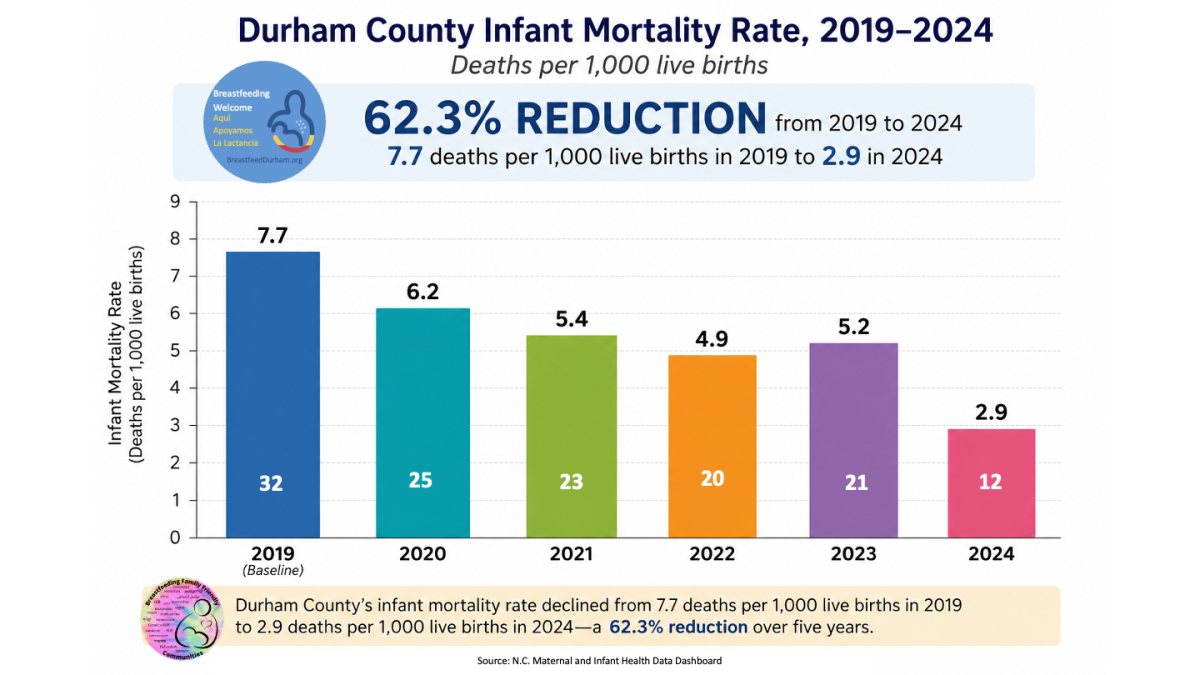
New data from 2024 reveals a 62.3% reduction in infant mortality in Durham County over the last five years. In 2019, a heartbreaking 32 families in Durham grieved the loss of an infant (7.7 deaths per 1,000 live births). In 2024, that number dropped to 12 families (2.9 deaths per 1,000 live births).
With this historic low, Durham County has shattered state and national safety benchmarks. To put this in perspective:
- National Average: 5.6 deaths per 1,000 live births
- North Carolina Average: 6.9 deaths per 1,000 live births
- Healthy North Carolina 2030 Target: 6.0 deaths per 1,000 live births
- Durham County (2024): 2.9 deaths per 1,000 live births
Equity-Centered Implementation Built on the Ten Steps
This progress wasn't a coincidence; it was the result of intentional, community-wide orchestration. Following the 2019 crisis year—which disproportionately impacted Black families—advocates, healthcare providers, and community organizations rallied together.
Breastfeed Durham utilized the Ten Steps to a Breastfeeding Family Friendly Community framework as the "connective tissue" to bind these massive public health efforts together. Crucially, the initiative deliberately centered equity from day one, employing Community Health Workers from affected areas, executing targeted programming for Black and LGBTQ+ families, and utilizing anti-bias training to ensure the universal infrastructure supported historically marginalized communities. The data confirms genuine equity gains: Black infant mortality fell 15% below the pre-crisis baseline, proving that outcomes improved for all families.
A Community-Wide Achievement
What started as an organization of just two members in 2018 has grown into a powerful network of 2,000 community advocates. This historic milestone belongs to the entire Durham ecosystem, including:
- 300+ local organizations that signed onto the Ten Steps framework.
- Healthcare systems that implemented family-friendly policies and improved clinical lactation practices.
- Workplaces, restaurants, and childcare centers that designed supportive lactation spaces and welcoming policies.
- Community leaders and policymakers who prioritized maternal and infant health.
As we look to the future, we know that infant mortality rates fluctuate over time. However, building a comprehensive, deeply-rooted community infrastructure ensures that our families have the lasting support they need to thrive. |