What Communities Are Learning About Sustainability
Students, tools, and systems that support long-term progress
As communities move from initial action to ongoing implementation, questions of capacity quickly surface. What can be carried long-term? How do we prevent burnout? And how do we design systems that survive staff transitions and shifting priorities?
Across BFFC partner communities, several sustainability strategies are emerging.
Strategy 1: Build capacity through students—with intentional mentorship
What’s working
Many communities are expanding capacity by embedding students as contributors—not observers. Students are supporting policy work, communications, outreach, documentation, and progress tracking, while gaining experience that shapes their future careers.
However, this strategy only works when mentorship is treated as part of the work, not an add-on.
Communities seeing the greatest benefit are those that:
- Define clear scopes and deliverables
- Meet regularly with students
- Invest in mentoring relationships
- Care about what students take away—not just what gets done
Why it works
- Students bring time, focus, and fresh perspective
- Communities gain tools they can continue using
- Capacity grows when mentorship is built in intentionally
An important reality check
Embedding students is not a shortcut. It requires time, structure, and care. Without those elements, student placements can increase workload rather than reduce it.
Communities finding success are honest about this upfront and design placements accordingly.
How to try this
- Define specific deliverables before onboarding a student
- Align the student with one Step, one community, or one project
- Build in regular mentoring time (weekly or biweekly)
- Prioritize outputs that can be shared or replicated
Action step (90 days):
Identify one task that keeps getting delayed—and decide whether you have the time and structure to redesign it as a student-led, mentored deliverable.
Strategy 2: Use lightweight tools to support follow-through
What’s working
Communities are using simple project management tools to reduce mental load and improve continuity, especially during staff transitions.
Shared task boards allow teams to:
- Assign tasks clearly
- Track progress visually
- Attach files, links, and notes
- Preserve institutional memory
The emphasis is on tools that support people, not add complexity.
How to try this
- Use one shared board for a single project or step
- Keep systems flexible and low-stakes
- Choose tools that reduce friction rather than increase it
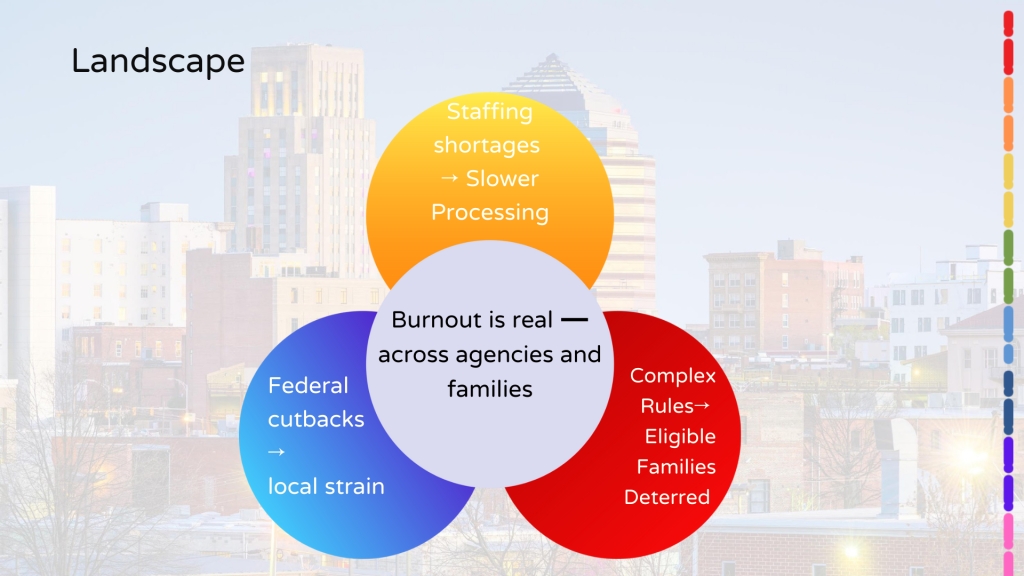
Strategy 3: Name burnout—and design around it
Across communities, burnout was not framed as an individual failure, but as a systems issue requiring collective solutions.
Communities emphasized:
- Normalizing pacing and pauses
- Designing systems that survive turnover
- Sharing tools rather than reinventing them
- Valuing progress over perfection
Sustainability comes from designing work that people can actually carry.
What these strategies have in common
Sustainable communities:
- Are honest about capacity
- Design systems with human limits in mind
- Invest in relationships, not just outputs
This approach protects both the work and the people doing it.
Sustainability isn’t about slowing down meaningful work. It’s about ensuring the work can continue—through change, growth, and the long term.