Skip to content
Breastfeeding Family Friendly Communities logo and text, including the word community in multiple languages.
Breastfeeding Family Friendly Communities
  • ABOUT US
    • Mission, Vision, Goals
      • Thank you for your donation!
    • Board of Directors
      • Organizational Ecosystem
    • Contact Us
    • History
    • Newsletter
    • Services
  • FINDING COMMUNITIES
    • Alabama
      • Tuskegee, Alabama
        • Tuskegee Self Appraisal
    • North Carolina, USA
      • North Carolina Breastfeeding Coalition
      • Alleghany County, NC
        • Alleghany County Self Appraisal
      • Asheville/Buncombe County, NC
      • Chatham County, NC
      • Durham, NC
      • Franklin County, NC
      • Guilford County, NC
        • Guilford County Self Appraisal
      • Hoke County, NC
      • Montgomery County, NC
      • Northeast NC Breastfeeding Coalition
      • Orange County, NC
      • Richmond County, NC
      • Scotland County, NC
      • WNC SAFE Team
    • Pennsylvania, USA
      • Pennsylvania Chapter, AAP
      • Chester, Pennsylvania
      • Lycoming Clinton, Pennsylvania
        • Williamsport, Pennsylvania
      • Wilkinsburg, Pennsylvania
    • Virginia, USA
      • Hampton Roads Region
        • Hampton Roads Region Self Appraisal
    • Wisconsin, USA
      • Wood County, WI
  • CREATING COMMUNITIES
    • Ten Steps to a Breastfeeding Family Friendly Community
      • The Ten Steps with Approaches and Measures
      • Frequently Asked Questions
    • Building a Community
      • Businesses
        • Business Outreach
        • Childcare
        • International Code of Marketing of Breast-milk Substitutes
        • Lactation Policy Template
        • Rethinking Promotion
      • Community Non-Profit
        • Community Centers
        • Community Pools
        • Food Pantries
        • Places of Worship
        • Public Libraries
      • Health Care
        • First Responders
        • International Code of Marketing of Breast-milk Substitutes
        • Lactation and Medications
        • Lactation Support Providers
        • Medical Office Sample Lactation Policy
        • Step 4: Informing Families During Pregnancy
        • Step 5: The Journey to the Baby-Friendly Designation
      • K-16 Schools
        • Childcare
          • An Overview
          • Piloting Friendly Childcare
          • Best Books
        • Public Schools
        • Universities
      • Government
        • First Responders
        • Policy
        • Proclamation
    • Templates
      • Logo Examples
    • Trainings
      • NACCHO | Blueprint
      • USBC 2026
      • Breastfeeding Friendly Childcare – An Overview
      • Normalizing Breastfeeding
      • Curriculum
      • Environments
        • Community Connections
        • Lactation Space
      • Feeding Infants
      • Writing a Policy
  • COMMUNITIES STAY ABREAST
    • Policy Gaps
    • Community Self Appraisals
  • EMERGENCY PLANNING
    • SAFE Infant Feeding
    • Infant and Young Child Feeding in Emergencies (IYCFE)
    • First Responders
      • Training for First Responders
  • Donate
    Donate

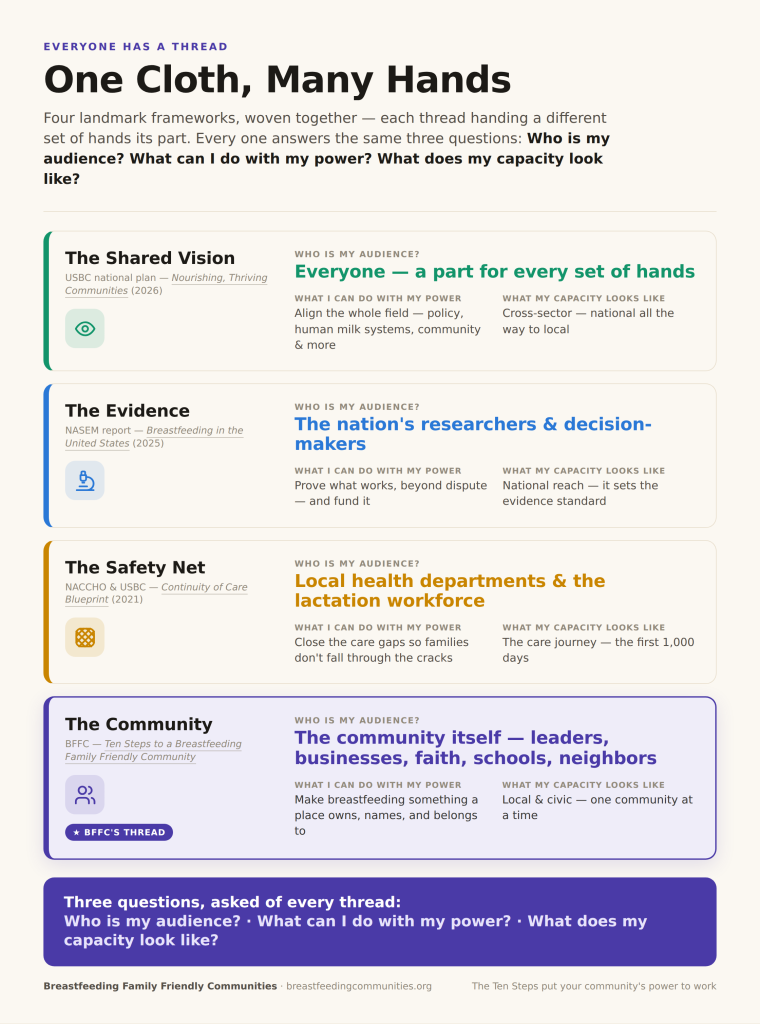
Everyone Has a Thread: One Cloth, Many Hands

Advocacy, Communities, National Breastfeeding Month / Love Anderson

This week the U.S. Breastfeeding Committee fully released its national plan, Nourishing, Thriving Communities: A National Plan for First Foods, Breastfeeding, and Lactation Support through Policy, Systems, and Environmental Change. […]

Everyone Has a Thread: One Cloth, Many Hands Read More »

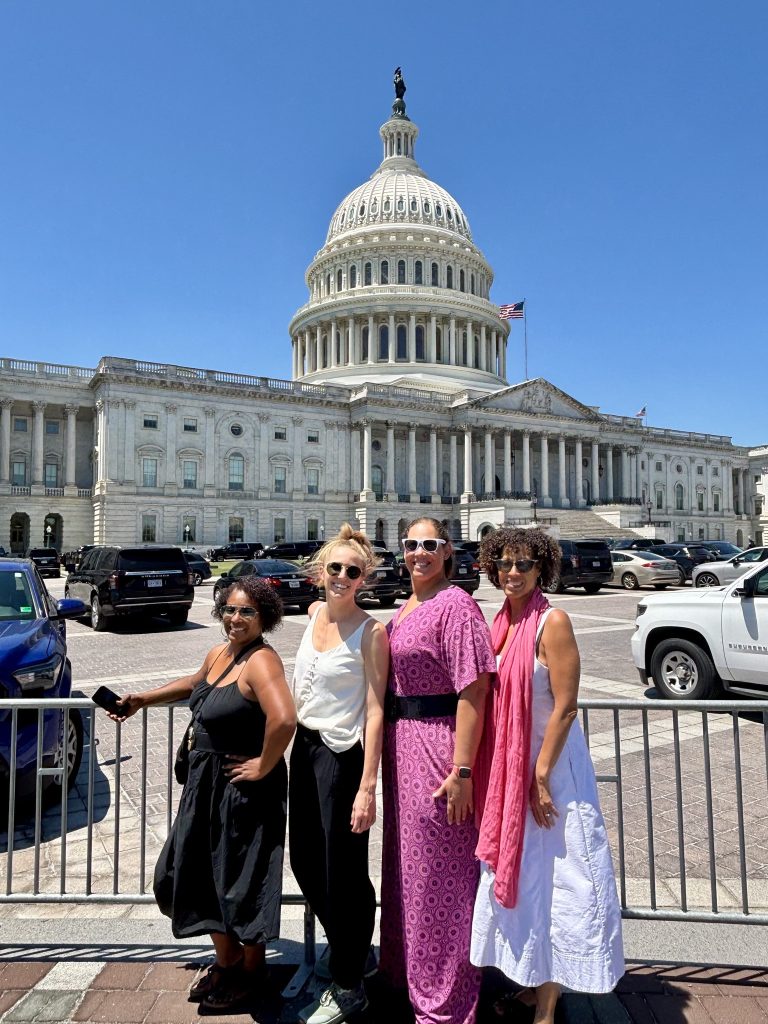
A June That Started on Capitol Hill

Advocacy / Love Anderson

Some months you feel the whole ecosystem at once. June was one of them — and it started on Capitol Hill. On June 3, I spent the U.S. Breastfeeding Committee’s

A June That Started on Capitol Hill Read More »

What I’m Still Sitting With After Black Maternal Health Day of Action

Advocacy / Love Anderson

June was a whirlwind. In the span of a few weeks I went from Capitol Hill for the U.S. Breastfeeding Committee’s Day of Advocacy, to presenting at the National Breastfeeding

What I’m Still Sitting With After Black Maternal Health Day of Action Read More »

Step 4 Is for Everyone: Are Families with Disabilities Getting the Information They Deserve?

Communities / Love Anderson

Step 4 of the Ten Steps to a Breastfeeding Family Friendly Community is deceptively simple: during pregnancy, all families in the community are informed about the benefits of chest/breastfeeding, the

Step 4 Is for Everyone: Are Families with Disabilities Getting the Information They Deserve? Read More »

Nurture NC’s Value-Added Benefits Survey

Advocacy / Breastfeeding Family Friendly Communities

If you have North Carolina Medicaid, your health plan is supposed to offer more than the basics. Those “extras” are called value-added benefits — things like breast pumps, baby-related supplies,

Nurture NC’s Value-Added Benefits Survey Read More »

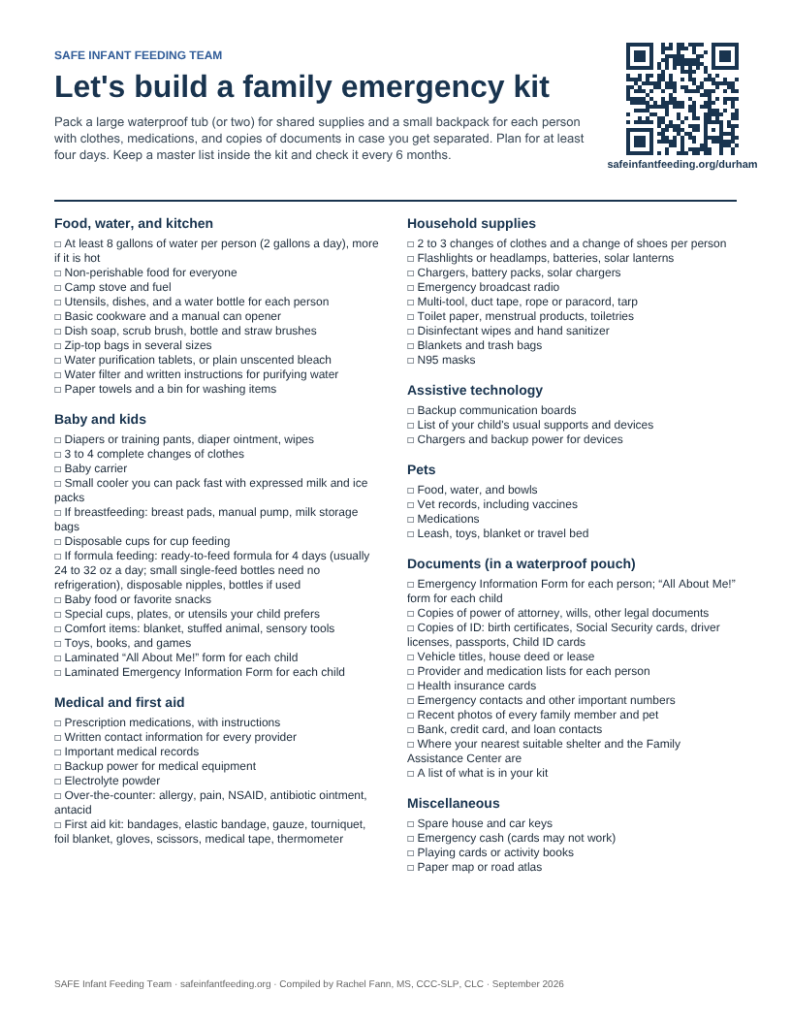
Every Baby Still Needs to Eat: Planning for Infants When Emergencies Hit

Infant and Young Child Feeding in Emergencies (IYCFE) / Breastfeeding Family Friendly Communities

When a hurricane, flood, or long power outage hits, the youngest members of a community are often the most vulnerable — and the easiest to overlook. Feeding a baby safely

Every Baby Still Needs to Eat: Planning for Infants When Emergencies Hit Read More »

Exciting Opportunities for MPH Students

Advocacy / Breastfeeding Family Friendly Communities

Opportunities to Transform Public Health At Breastfeeding Communities, we believe in the power of collaboration and innovation to create healthier, more equitable communities. As part of our mission to advance maternal

Exciting Opportunities for MPH Students Read More »

Clean Water Is a First-Food Issue

Infant and Young Child Feeding in Emergencies (IYCFE) / Breastfeeding Family Friendly Communities

One of our SAFE Infant Feeding Team research partners has a new paper out, and it puts careful evidence behind something we say all the time: when we talk about

Clean Water Is a First-Food Issue Read More »

Durham County: A Model for Comprehensive Change

Uncategorized / Love Anderson

What happens when you implement all Ten Steps and center equity? Lives are saved. Durham County, North Carolina—the first county to implement the Ten Steps to a Breastfeeding Family Friendly

Durham County: A Model for Comprehensive Change Read More »

New Statewide Training Series

Infant and Young Child Feeding in Emergencies (IYCFE) / Breastfeeding Family Friendly Communities

Addresses Critical Gaps in Infant and Young Child Feeding in Emergencies, hosted by North Carolina Breastfeeding Coalition  Raleigh, NC — The North Carolina Breastfeeding Coalition, in collaboration with the SAFE

New Statewide Training Series Read More »

1 2 … 13 Next →

COMMUNITIES STAY ABREAST!

  • Everyone Has a Thread: One Cloth, Many Hands
  • A June That Started on Capitol Hill
  • What I’m Still Sitting With After Black Maternal Health Day of Action
  • Step 4 Is for Everyone: Are Families with Disabilities Getting the Information They Deserve?
  • Nurture NC’s Value-Added Benefits Survey
  • Every Baby Still Needs to Eat: Planning for Infants When Emergencies Hit
  • Exciting Opportunities for MPH Students
  • Clean Water Is a First-Food Issue
  • Durham County: A Model for Comprehensive Change
Shop

Upcoming Events

Jul 30
12:00 pm - 1:00 pm

NC Breastfeeding Coalition Statewide Meeting: Countdown to National Breastfeeding Month

Aug 1
August 1 - August 7

World Breastfeeding Week

Aug 1
August 1 - September 22

National Breastfeeding Month

Aug 4
1:00 pm - 2:30 pm

SAFE Support and Strategic Core (S3C)

Aug 6
8:00 pm - 10:00 pm

North Carolina Breastfeeding Coalition Mixer

Aug 8
August 8 - August 14

Indigenous Milk Medicine Week

Aug 14
12:00 pm - 1:00 pm

Baby Cafe Chat: Building Breastfeeding Family Friendly Communities

View Calendar
Financial Information
Copyright © 2026 Breastfeeding Family Friendly Communities
6319 Coronado Lane, Durham, NC 27713, United States
  • Facebook
  • Instagram
  • LinkedIn
  • Twitter
  • YouTube

All BFFC programs and services are open to everyone; no one is denied services on the basis of race, color, ethnicity, national origin, immigration status, religion or creed, age, sex, pregnancy or lactation status, sexual orientation, gender identity, family structure, primary language, ability or disability, veteran or military status, or socio-economic status.