L. M. Dinour and K. M. Camacho, “Breastfeeding Education in Kindergarten Through 12th Grade: A Content Analysis of United States Health Curriculum Standards,” Journal of School Health 96, no. 7 (2026): e70173, https://doi.org/10.1111/josh.70173.
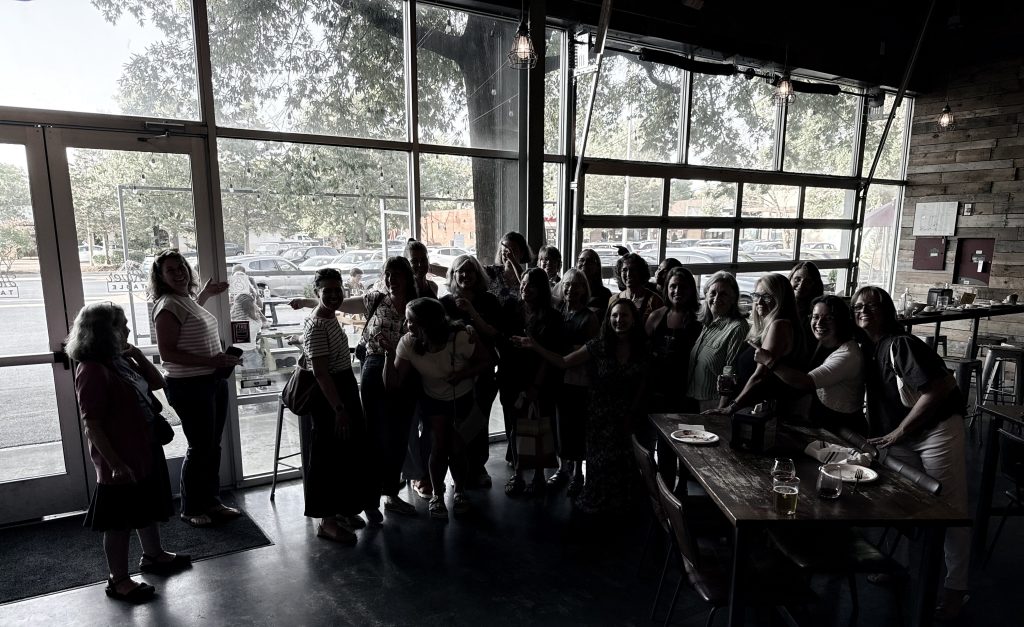
A quick word of thanks before we begin: this article came to us from Emily Hannon, who flagged it during Boobs, Banter & Booze, a gathering hosted by Breastfeed Orange at Haw River Tap and Table, in anticipation of World Breastfeeding Week and National Breastfeeding Month. The evening brought together people who serve lactating families across Orange County and the wider Triangle to connect, talk through gaps in care, and get to know one another. Without quite planning it, the gathering touched six of our Ten Steps in a single night, held at a Breastfeeding Friendly community partner that welcomes breastfeeding patrons and supports its employees (sticker proudly on the door). This is what we mean when we say the Ten Steps can be fun. Thank you, Emily!
Some of the most useful breastfeeding research turns up far from the lactation literature, and this study in the Journal of School Health is a perfect example. Dinour and Camacho combed through the health education standards of all 50 states to ask a simple question: do our public schools ever teach children that breastfeeding matters? The answer, almost everywhere, is no. Only Arkansas, Georgia, and North Dakota mention breastfeeding as a beneficial practice at all, and Arkansas stands alone in requiring age-appropriate breastfeeding education as part of every school’s health and wellness plan.
What students encounter instead is telling. Where breasts or breast milk do show up in state standards, it is nearly always in connection with disease, breast cancer or HIV transmission, with no mention anywhere that breastfeeding protects the health of both mothers and babies. For most American students, the only time school addresses this topic, it is framed as a hazard.
This is Step 10 of our Ten Steps to a Breastfeeding Family Friendly Community, measured at national scale. Step 10 calls on education systems, childcare, K–12, colleges, and universities, to include breastfeeding-friendly curricula at every level, and this paper documents precisely how far the country has to go. We were honored to see the authors cite Breastfeeding Family Friendly Communities as a model for how age-appropriate school lessons can help normalize breastfeeding, and they go a step further by offering sample standards for each grade band, from kindergarten through high school, that advocates can carry directly to their state boards of education.
Three states have opened the door. The other forty-seven are where our work begins.