
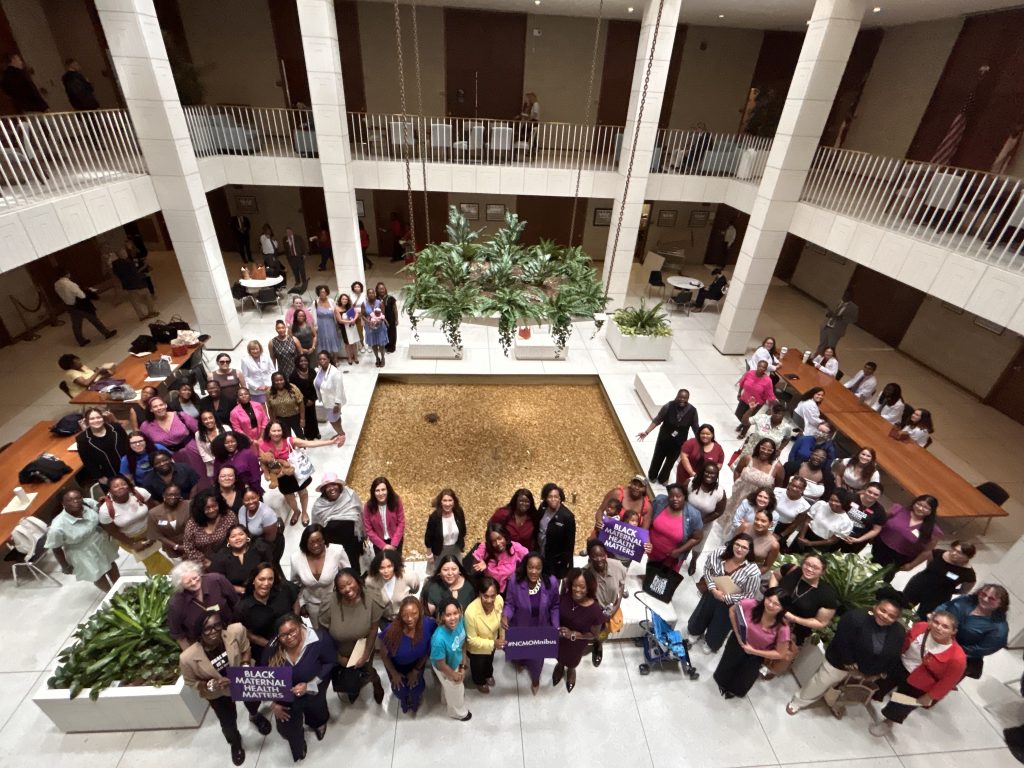
June was a whirlwind. In the span of a few weeks I went from Capitol Hill for the U.S. Breastfeeding Committee’s Day of Advocacy, to presenting at the National Breastfeeding Conference & Convening, to the North Carolina legislature for Black Maternal Health Day of Action. I’m still unpacking all of it. But it’s that last day, at our own statehouse, that I keep turning over in my mind.
What moved me was how many North Carolina legislators genuinely cared about this issue. They asked good questions. They knew the stakes for moms and babies. But I’d be leaving out the hardest part of the day if I didn’t say the rest of it out loud: nearly all of them stood on one side of the aisle.
So here’s the question I keep racking my brain over. How do we help our conservative legislators in North Carolina see that caring for mothers and babies is their issue too?
I don’t say that as a gotcha. I say it because I think the case is genuinely there to be made, and made in a language everyone at that building already speaks. Yes, ultimately we’re asking for money. But investing in maternal and lactation health is one of the clearest returns a state can buy. Funding lactation support reduces health care costs. It saves Medicaid dollars. It builds a healthier North Carolina, a more productive workforce, and yes, a stronger economy. Or, as my team landed on recently while we tried to boil it down: lactation support pays off.
We’re not guessing about this. We’re watching it happen at home. In Durham County, infant mortality has been falling as community breastfeeding support has grown, the kind of outcome that should make every legislator, of any party, lean in.
And still. Something else stayed with me from that day. Even many of the supportive legislators told me their hands felt tied, that they didn’t see a clear path to actually move the change we were asking for. That’s the part I don’t want us to look away from. If the people who already agree with us feel powerless, then part of our job isn’t only persuasion. It’s handing them something to hold: the data, the economic case, the local proof, the coalition behind them, so that “I care about this” can finally become “I can do something about this.”
I don’t have the whole answer yet. But I know it starts with refusing to write anyone off, and with getting sharper about why this work pays, for babies, for families, and, in the language of a budget, for the whole state.
If you’ve found a way into this conversation across the aisle, I genuinely want to hear it. This is a thread we have to weave together.