Breastfeeding Family Friendly Communities is the blue skies strategy: the slow work of building communities where feeding a baby is everyone’s business. The SAFE Infant Feeding Team is the gray skies work, for the days that strategy gets tested.
Most of those days are not hurricanes. A house fire, an eviction, a power cut, a car that breaks down with a cooler of milk in the back. They separate a baby from a feeding plan just as surely as a disaster does, and the people who catch them are home visitors and community health workers who are already in the house.
One page for families, free to share
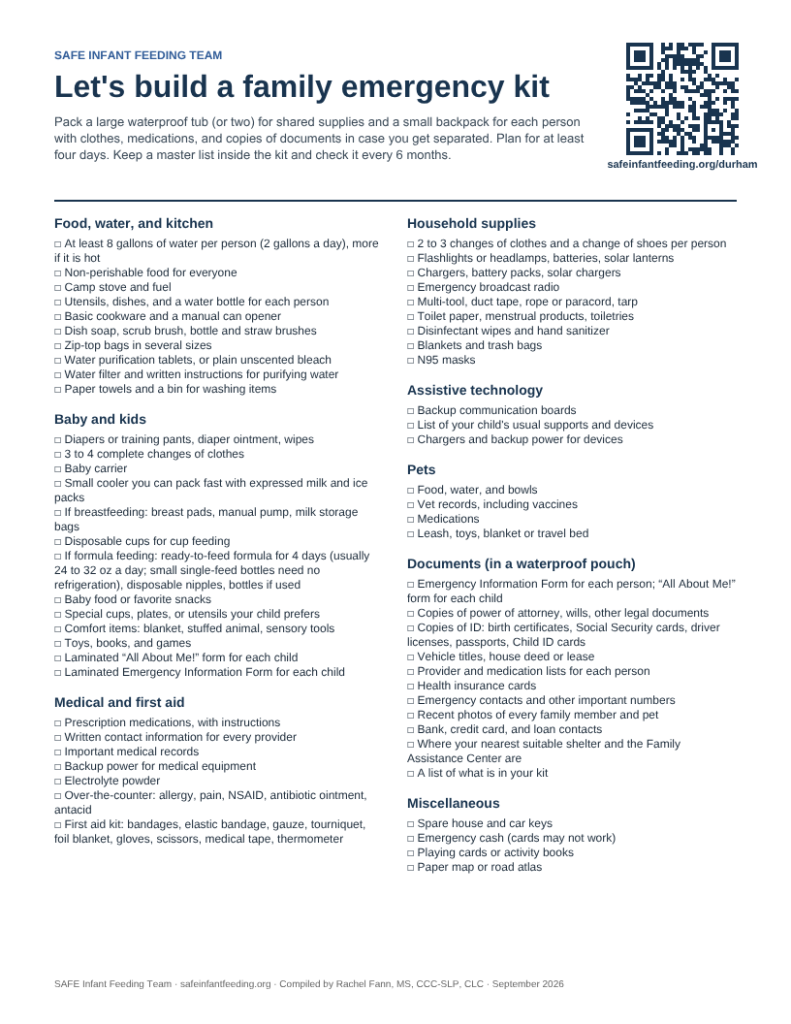
SAFE keeps a resource page for families and caregivers at safeinfantfeeding.org/families: a one-page family emergency kit checklist in English and Spanish, picture instructions for feeding a baby safely when there is no power or clean water, a DIY cold sanitation kit, winter weather planning, and short videos. Everything is shared under BFFC’s open source use agreement, so a coalition, health department, or home visiting program can print it, link it, or adapt it.
What a county version looks like
In September, SAFE trained Durham’s home visitors and direct service staff on safe infant feeding in micro-emergencies, then built safeinfantfeeding.org/durham so everyone who attended, and every family they serve, has the whole list in one place. It adds the local layer: the county alert system, who to call if someone in your home would need help evacuating, where to get feeding help, and free emergency child care through the National Emergency Child Care Network. The same structure works for any county.
If your community wants the training, or help building its own page, start at Bring us to your community.